What Is Arctic Engineering? Protecting Infrastructure From Climate Change


Temperatures in the Arctic are rising twice as fast as any other place on the planet. That is the challenge currently facing arctic engineers, the frozen ground specialists charged with maintaining and expanding regional infrastructure. It’s a big challenge for a young discipline. Arctic engineering has only been recognized as its own discipline since the creation of the Trans-Alaska Pipeline System in the 1970s. Now, the big thaw threatens roads, bridges, and buildings. Who ya gonna call?

Hannele Zubeck, professor of engineering at the University of Alaska, Anchorage, would be a pretty good person to start with. She has been working in cold regions engineering since 1985 and is Vice President of the International Association for Cold Regions Development Studies. She’s passionate about teaching the next generation of arctic engineers, who will be tasked with preserving and building in one of the most rapidly changing regions in the world.

Read the entire article here.

Source: What Is Arctic Engineering? Protecting Infrastructure From Climate Change | Inverse

Workforce Wednesday: The sheet metal trade | KTVA Anchorage CBS 11

If you’re creative and like working with your hands, while making more than $20 an hour, then you may want to consider taking up a career in the sheet metal trade. It’s part of Alaska’s $7.3 billion construction industry

Earlier this month, Cari-Ann Carty with the Alaska Process Industry Careers Consortium and Jim Letts, President of Sheet Metal Incorporated, joined Daybreak to talk about the industry. Heating and ventilation type of work is what you find most in Alaska. It also includes welding and industrial fields like shipbuilding. Letts said it’s more than welding.

“It’s a fabrication for ventilation systems,” he said. “We have things that we build from scratch from a flat piece of metal to a 3D object, of course there’s architectural sheet metal. It’s multifaceted.”

Pay Range

  • Entry Level: $21/hr + 5% raise every 1,000 hours
  • Journeymen: $41/hr + $23 per hour in benefits

APICC Outreach Coordinator

  • Martha Peck
  • (907) 770-5250
  • Martha@apicc.org

For more information on employment and training, click here.

Source: Workforce Wednesday: The sheet metal trade | KTVA Anchorage CBS 11

MAPTS staff Recognized with President’s UA Spotlight Award

Mike Azzara, René Azzara, Daren Case, Elizabeth Hardie and Jim Smith of the Mining and Petroleum Training Service, or MAPTS, were recognized with the President’s Spotlight Award during the Statewide Town Hall meeting on Feb. 23. The team was recognized for its work in developing a state-of-the-art mining training program in partnership with industry and the Yukon College.

The UA Spotlight Award recognizes UA System employees and teams who perform a singular accomplishment above and beyond the norm. The Award is a way to timely demonstrate appreciation for one-time exceptional employee accomplishments.

Read the full article here.

Source: Transitions & Recognition | Voice

Al Grant: Health and safety expertise makes sound career choice

Long-time safety professional Al Grant is part of a team working to launch a new bachelor’s degree in safety at UAA’s Community and Technical College. Read the full article here.

Source: Al Grant: Health and safety expertise makes sound career choice – Green & Gold News

Workforce Wednesday: How to Become a Heavy Equipment Operator

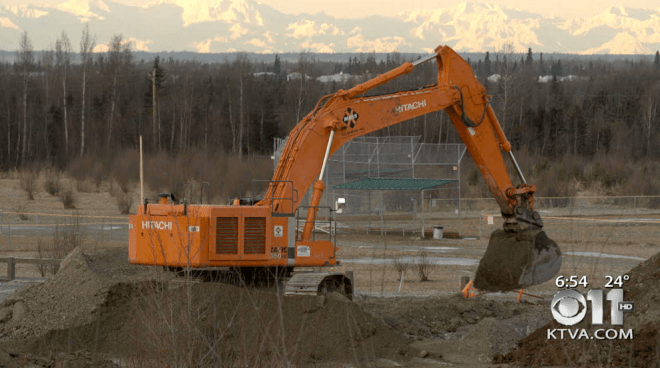
From loaders and dozers to excavators and graders, Patrick Rose, the outreach coordinator with Northern Industrial Training (NIT) joined Daybreak to give insight on careers as a heavy machine operator.

According to Alaska Process Industry Careers Consortium (APICC), pay starts anywhere from $18 to $24 an hour. Eventually, experienced operators can earn more than $100,000 a year. To break into the field, NIT offers classes tailored to these real-life Tonka trucks.

“We actually have a program that’s six weeks long, a little bit of classroom but mostly all hands-on time,” said Rose. “So that way you get experience using all the different types of equipment … If you like working with your hands, you want to be outside, there’s nothing better than that. You get to see a job start to finish.”

Watch the video to find out which businesses are hiring right now.

Source: Workforce Wednesday: How to become a heavy equipment operator | KTVA Anchorage CBS 11