Program bridges gap between village and college

Imagine boarding a plane in your home village, landing in Fairbanks or Anchorage, navigating your way by taxi or public bus to a giant university populated by people you don’t know, figuring out how to enroll in and pick courses, and finally, ending up in a classroom of hundreds of other students.

Many rural Alaskans have gone through this tricky transition from vibridgellage to college and while it’s certainly doable, it’s not always easy.

“Socially, a lot of the students from very small villages aren’t used to being in a class at the university that has 200 students in it—that’s more than they have in their entire village, so that’s overwhelming,” said Denise Wartes, director of the Rural Alaska Honors Institute (RAHI).

Since 1983, the institute has provided a bridge for students making that transition through an intensive six-week summer program in which they attend college classes and earn transferable credits at the University of Alaska Fairbanks.

Read the full article here.

Source: Program bridges gap between village, college – The Bristol Bay Times
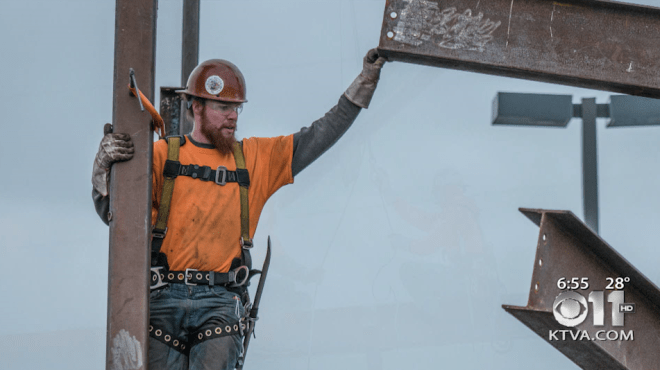
Workforce Wednesday: Iron work careers | KTVA Anchorage CBS 11

From helping create bridges and buildings to highways and homes, it’s one of the construction industry’s most demanding careers: iron workers.

In Anchorage, you can see their most recent work in the University of Alaska Anchorage Engineering Center’s arched bridge and the Alaska Airlines Center. Apprenticeships are the best way to get started, plus apprentices get paid to learn. The apprenticeships pay from $21 to $32 an hour, not including benefits like annuity, retirement and healthcare, which could mean pay upward of $65 an hour.

Anthony Ladd, a business agent and training coordinator with Iron Workers Local No. 751, joined Daybreak to talk about the industry. He strives to do his job not just right, but safely as well, he said.

“It’s very fast paced, it’s very exciting, it’s very dangerous and it never ends. It’s almost too good to be true once you’re out there,” Ladd said.

Iron Workers Local No. 751 is accepting applications for Alaska residents only. The deadline is March 31.

For more information, click here.

Source: Workforce Wednesday: Iron work careers | KTVA Anchorage CBS 11

Al Grant: Health and safety expertise makes sound career choice

Long-time safety professional Al Grant is part of a team working to launch a new bachelor’s degree in safety at UAA’s Community and Technical College. Read the full article here.

Source: Al Grant: Health and safety expertise makes sound career choice – Green & Gold News

Workforce Wednesday: Jobs to make the Iditarod run | KTVA Anchorage CBS 11

Daybreak’s Workforce Wednesday featured about jobs that make the Iditarod run.

A recent study on the Last Great Race found that a single day during the race was worth about $7-$8 million in new money for the state economy.

Race director Stan Hooley said the impact can be far greater when you consider the race is 10-14 days long and spans 1,000 miles in western Alaska. Dozens of behind-the-scenes jobs are needed for the race in areas like telecommunications, aviation, environmental science and health care.

There are roughly 1,500 Iditarod volunteers and several employees in support services.

“To make this race happen we need a lot of generalists, but we also need a lot of specialists,” Hooley said. “People with aviation backgrounds play a huge role in what we do.”

To get involved with the race, click here.

Source: Workforce Wednesday: Jobs to make the Iditarod run | KTVA Anchorage CBS 11

Tourism Could Prove Bright Spot in Alaska’s Dark Economic Outlook

Many sectors of Alaska’s economy are bracing for a downturn as oil prices drop and lawmakers try to solve a $3.5 billion budget deficit. But Anchorage’s tourism industry may have less to worry about.

That was the main message delivered by Julie Saupe, the CEO of Visit Anchorage, at a luncheon hosted by the city’s nonprofit marketing organization on Thursday to deliver its annual report.

“Tourism is on the rise … we are anticipating a good year,” Saupe said.

The Alaska Department of Labor and Workforce Development projects the leisure and hospitality sector in Alaska — which includes hotels, restaurants and bars — to grow by 300 jobs this year, with about 200 of those in Anchorage.

That’s on top of 700 jobs added in the sector across the state last year. Read the full article here.

Source: Alaska Dispatch News