Nonprofit Spotlight: Alaska Native Science & Engineering Program | Excellence in Philanthropy


For many Native American students, college seems as far off as the moon. But as Buzz Aldrin said in an appearance at the Alaska Native Science & Engineering Program, “Once you set your mind to get something done, seemingly anything is possible.”

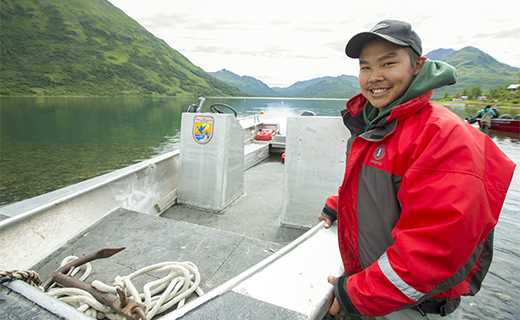
ANSEP has been boosting students to university and beyond since 1995, with a plan that begins in middle school and extends into career placement after graduation. This series of intensive academic supports centered at the University of Alaska Anchorage inspires students to explore science, technology, engineering, and mathematics.

As of 2016, roughly 2,000 students have taken part in the program, which has over 100 partners in the form of philanthropic organizations, corporations, educational institutions, and government agencies. It helps Natives prepare for careers within the oil and gas industry, biology, conservation, and other technical fields. The Urban Institute has categorized ANSEP as one of the most successful STEM programs in the country, propelling 85 percent of graduates to STEM careers.

Read the full article here.

Source: Nonprofit Spotlight: Alaska Native Science & Engineering Program | Excellence in Philanthropy | The Philanthropy Roundtable

Workforce Wednesday: Becoming a Power Dispatcher

Power dispatchers are the people who help keep the lights on for Alaskans from Anchorage to Cooper Landing. According to Mike Miller, a power dispatcher with Chugach Electric Association, they even forecast energy usage for customers during special events like the Super Bowl. A power dispatcher makes sure there is a stable power grid so those Alaskans can reliably get electricity. Miller said in the event of an outage, a dispatcher will coordinate with crews working in the field so power can be restored quickly and safely.

Cari-Ann Carty with Alaska Process Industry Careers Consortium said there’s a lot of career opportunities for a power dispatcher as most major communities in Alaska have a power utility company. Carty mentioned two ways to start a career as a power dispatcher. The first is to get a degree in electrical engineering like Miller. The other way is getting an internship or apprenticeship program through the International Brotherhood of Electrical Workers. The pay ranges from $25 to $55 an hour.

For more information on becoming a power dispatcher and to see who’s hiring, head to APICC.org.

Watch the full Workforce Wednesday segment here.

Source: Workforce Wednesday: Becoming a power dispatcher | KTVA 11

Want to be a millwright? Training will soon be available, in Anchorage.

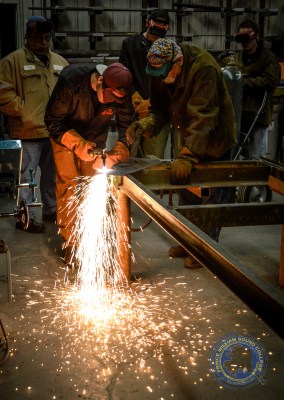
What’s a millwright? It’s a seldom-discussed but absolutely crucial (and highly paid) profession that demands a meticulous eye, versatility, and expertise with everything from turbines and pumps to lasers and other highly technical equipment.

The word “millwright” conjures the thought of someone from an antique age — a leather-aproned, mustached man in a sepia photograph, sweaty, amid the dusty belts, gears and wheels of a machine shop.

The reality, now, in Alaska, is that a millwright is a person with a sophisticated range of skills who can find work in just about any of the state’s industrial sectors — including mining, oil and gas, seafood processing, power and energy, water and wastewater. Freshly minted millwrights can command a starting salary between $70,000-$120,000.

Why would companies pay that kind of coin to a person who fixes, maintains and moves industrial machinery?

They pay because millwrights know, for example, that gearboxes and turbines and hydraulic pumping and piping must be laid on a center line, with everything square and plumb. If they’re not, anything can happen: a small pump aligned improperly might draw more power so it doesn’t operate as efficiently and wastes money.

Read the full article here.

Source: Want to be a millwright? Training will soon be available, in Anchorage – Green & Gold News

Workforce Wednesday: Engineering in Alaska

Alaska is home to dozens of engineering specialties, ranging from civil to mechanical, aerospace to ship building. If there’s a big infrastructure project, chances are there was an engineer involved.

Engineers also make a broad salary, averaging anywhere from $46 to $73 per hour, according to Cassie Ostrander, a spokesperson for the Alaska Process Industry Careers Consortium (APICC). She and Kristina Storlie joined the Daybreak crew to discuss engineering jobs in Alaska.

Storlie used to work in the food service industry. Now, as a mechanical engineer, Storlie spends her day behind a desk or out in the field, so “every single day is completely different!” Storlie works under a professional engineer, and says she’s done everything from working on a hospital facility to the rocket launch facility on Kodiak Island.

People looking for that career change can enroll in the University of Alaska Anchorage’s or University of Alaska Fairbanks’ engineering programs, or drop in at an engineering firm and leave their resume. Ostrander said that ASRC Energy Services and CH2M both have open positions. She added that some firms will create a position for a person if they have the right skill set.

For more information, visit APICC’s website or watch the video segment here.

Source: Workforce Wednesday: Engineering in Alaska | KTVA 11