ICYMI: Alaska Economic Trends (November 2023)

Longlining under lenticular clouds. This photo, taken by John Matzick, was part of the Alaska Region U.S. Fish and Wildlife Service’s “Fish From Your Point of View” contest.

Joshua Warren of the Alaska Dept. of Labor and Workforce Development examines the continued loss of seafood harvesting jobs. Despite the rebound from pandemic job losses in most of Alaska’s industries, the number of harvesters fell by 118 in 2022, or about 1.8 percent. The feature article, Small job decline for fishing in 2022: Harvesting jobs down overall each year since 2020, sheds light on regional impacts — the drastic reductions in seafood market price is prompting harvesters to pull up their nets or skip openings entirely in 2023.

The November edition also highlights the increase in safety measures, which continues to reduce fishing industry fatalities. The monthly high-level overview of Alaska’s economy closes this month’s publication.

Read the full edition here.

Trends is a nonpartisan, data-driven magazine that covers a variety of economic topics in Alaska.

Source: Alaska Department of Labor & Workforce Development, Research & Analysis
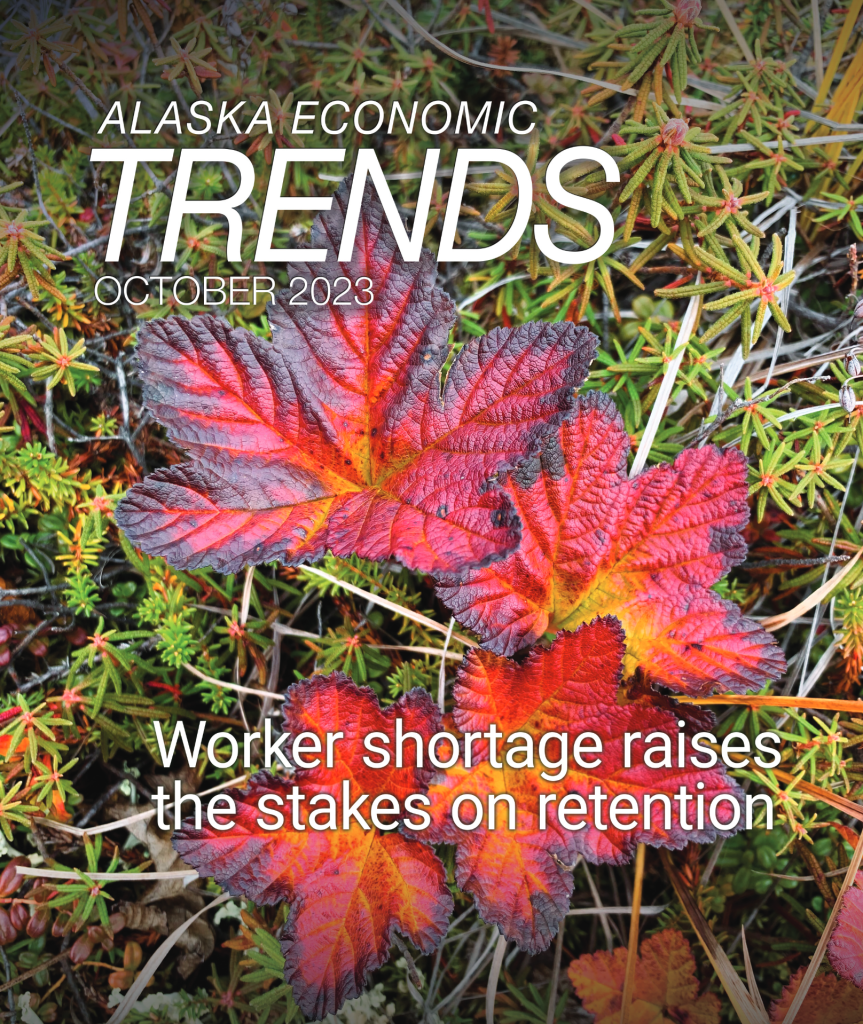
ICYMI: Alaska Economic Trends (October 2023)

Fall foliage lights up the tundra near Kotzebue. Photo by Brittany Sweeney, U.S. Fish and Wildlife Service.

Dan Robinson of the Alaska Dept. of Labor and Workforce Development sheds light on Alaska’s labor shortage — job vacancies are nearing all-time highs and there are more positions open than job seekers. The feature article, Labor Shortage Raises Retention Stakes, uncovers factors contributing to workforce turnover rates and the leverage employees have to ask for what they want.

The October edition also provides a monthly high-level overview of Alaska’s economy.

Read the full edition here.

Trends is a nonpartisan, data-driven magazine that covers a variety of economic topics in Alaska.

Source: Alaska Department of Labor & Workforce Development, Research & Analysis
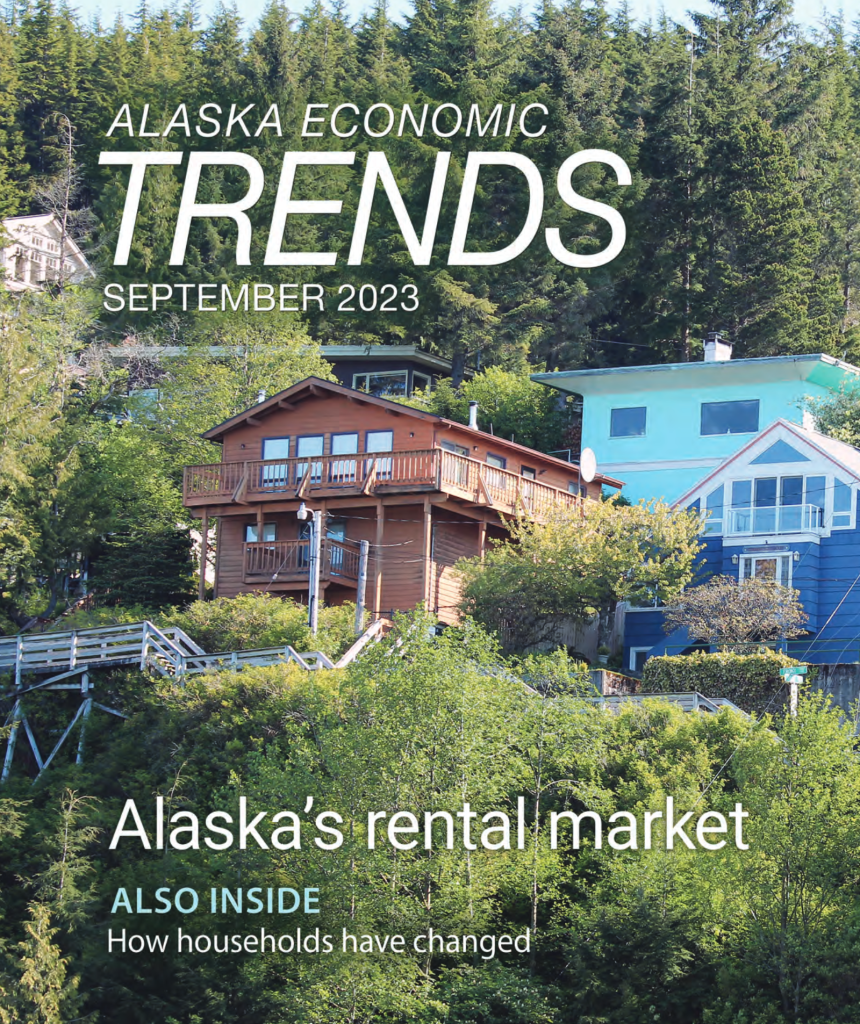
Alaska Economic Trends (September 2023)

A Ketchikan neighborhood, photo courtesy of Flickr user Teresa, Tick’s Pics.

Gunnar Schultz and Rob Kreiger of the Alaska Dept. of Labor and Workforce Development examine Alaska’s rising rent costs and the impacts on vacancy rates — although rental costs are increasing, vacancy rates remain low. The feature article, Rent up 7 percent over the year, uncovers factors contributing to the pace and provides an outlook for the coming years.

The September edition also examines how different Alaskan households look compared to the 1960s, just after Alaska was granted statehood.

Read the full edition here.

Trends is a nonpartisan, data-driven magazine that covers a variety of economic topics in Alaska.

Source: Alaska Department of Labor & Workforce Development, Research & Analysis

Alaska Economic Trends (August 2023)

Downtown Anchorage in summer 2011, photo courtesy of Flickr user Gator Chris.

Neal Fried, economist and writer for Alaska Dept. of Labor and Workforce Development, examines Anchorage’s bounce back from multiple setbacks — from starting well-positioned at the beginning of the 21st century to the compounding COVID obstacles, Anchorage is recovering, but the going is slow. The feature article, Anchorage, the Second Century, uncovers factors contributing to the pace and provides an outlook for the coming years.

The August edition also shares recent shifts in the construction industry and an analysis of Alaska’s economy.

Read the full edition here.

Trends is a nonpartisan, data-driven magazine that covers a variety of economic topics in Alaska.

Source: Alaska Department of Labor & Workforce Development, Research & Analysis

AEDC Releases Three-Year Outlook Report

Photo by Yereth Rosen/Alaska Beacon

During their annual luncheon, Anchorage Economic Development Corporation (AEDC) released a three-year outlook report, amplifying the need to address Alaska’s workforce shortage. 

Anchorage and Alaska are witnessing a weird combination of big economic opportunities that are mostly a sure thing, combined with economic threats that could lead to decades of stagnation and decline.

Bill Popp, AEDC President

Perhaps the greatest among economic threats is the declining numbers of working age adults. Between 2013 and now, Alaska’s workforce declined by 5.4% — placing Alaska in the top three states with the largest labor declines nationally. In Anchorage only, it’s anticipated the city will lose 10% of working age adults, a loss of 21,500 workers between 2013 and 2027. Alaska Department of Labor and Workforce Development (DOLWD) estimates bring hope for the near future and project modest population inclines statewide through 2030, inherently easing workforce shortages. 

The University of Alaska (UA) aims to address the state’s workforce needs by offering postsecondary opportunities in high-demand fields needed for Alaska’s economic growth. With over 200 programs in workforce development, UA is committed to training Alaskans for careers in Alaska jobs. In tandem with state agencies and industry partners, UA prioritizes being part of the state’s economic solutions.

Read more about the AEDC three-year outlook report and annual luncheon here.

Source: Yereth Rosen, Alaska Beacon.