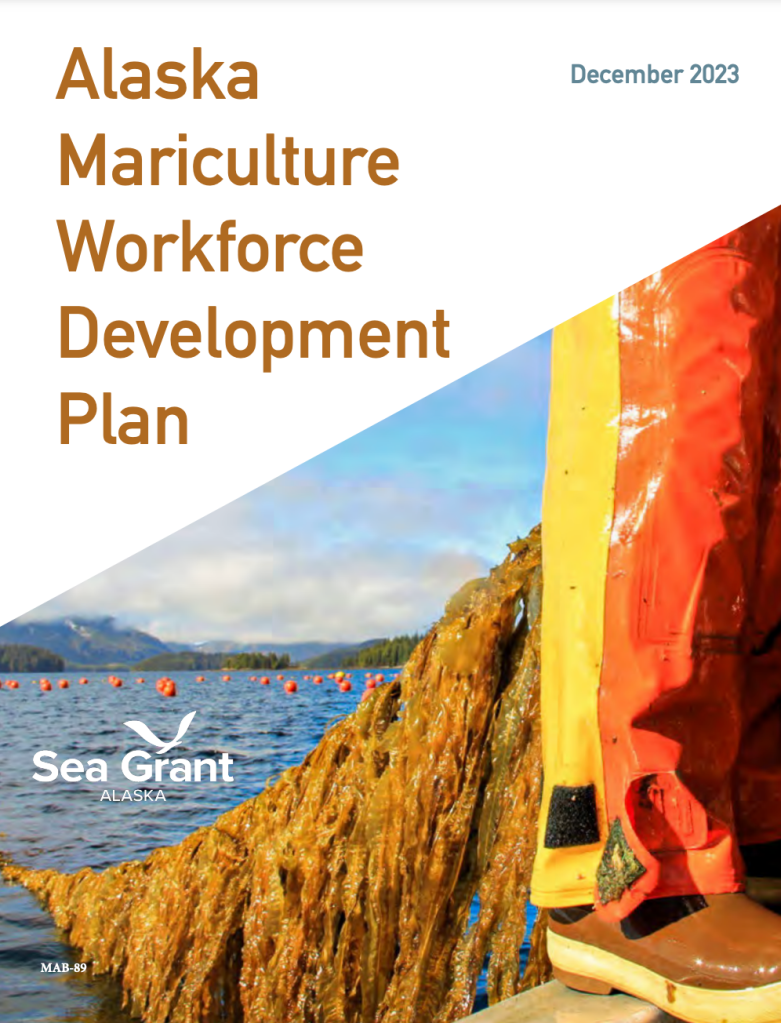
Alaska Mariculture Workforce Development Plan

Click the image to view the plan.

Alaska planners have identified mariculture workforce development as an important strategic area, essential to growing the current industry into a major sector in the state economy over the next 20 years. This plan covers goals, strategies, and action steps for meeting the current and forecasted training needs for a growing mariculture industry.

The state of Alaska supported the creation of the Alaska Mariculture Workforce Development Plan to increase mariculture economic development. This plan was overseen by the Alaska Mariculture Cluster, funded by a U.S. Department of Economic Development Administration Build Back Better Regional Challenge Grant awarded to the Southeast Conference.

Click here to view the plan.

Source: Alaska Sea Grant.
ICYMI: Alaska Economic Trends (March 2024)

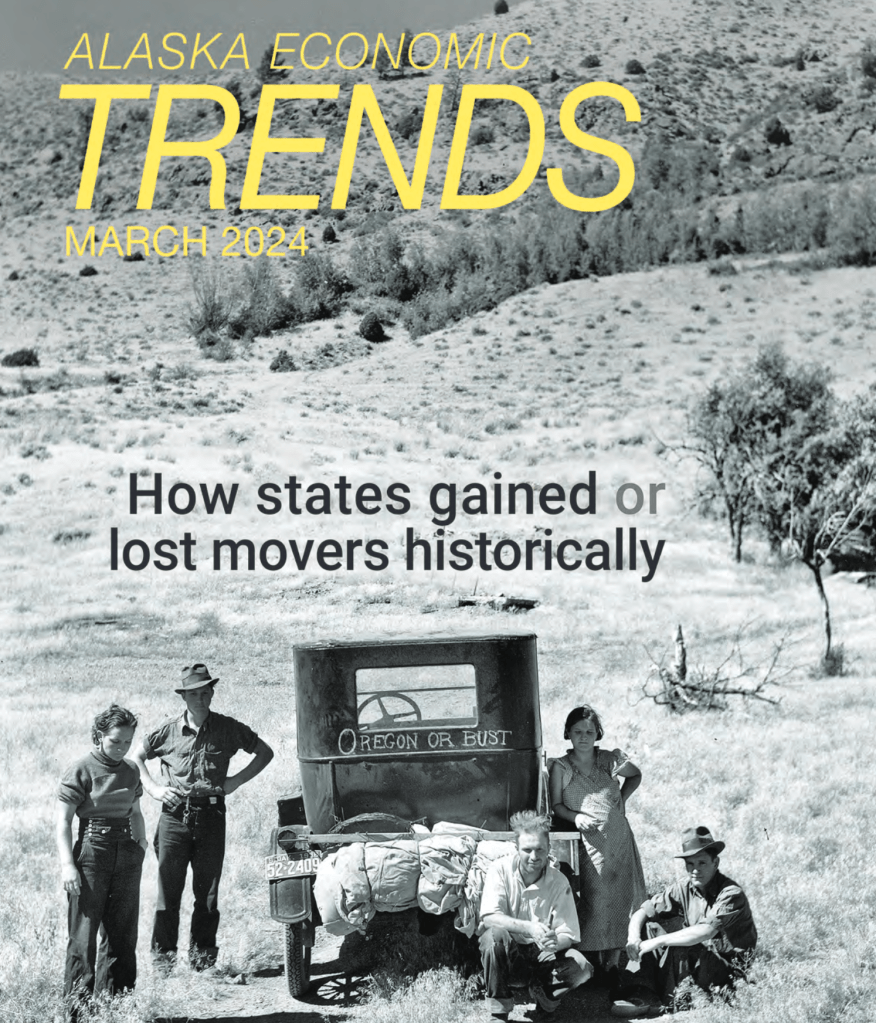
In July 1936 , Vernon Evans (center)and his family left their grasshopper-ridden and drought-stricken home in Lemmon, South Dakota, for a new start in Oregon or Washington. The family is shown here near Missoula, Mont., where they were stopped by the photographer, who worked for the Resettlement Administration. Evans said in the interview, which is recorded at livinghistoryfarm.org, that he made about 200 miles a day in his Model T Ford and they slept in a tent. The family hoped to get to Yakima, Wash., in time to pick hops. They eventually made it to Oregon, where Evans took a job with the railroad. Photo by Arthur Rothstein, archived at the Library of Congress.

Eric Sandberg of the Alaska Dept. of Labor and Workforce Development discusses Alaska’s 10+ year streak of net migration in comparison to losses among the rest of the country. Sandberg explores which states have been through similar periods of net migration losses and why, and how long they lasted.

The March edition also provides the monthly report Gauging the Economy.

Read the full edition here.

Trends is a nonpartisan, data-driven magazine that covers a variety of economic topics in Alaska.

Source: Alaska Department of Labor & Workforce Development, Research & Analysis

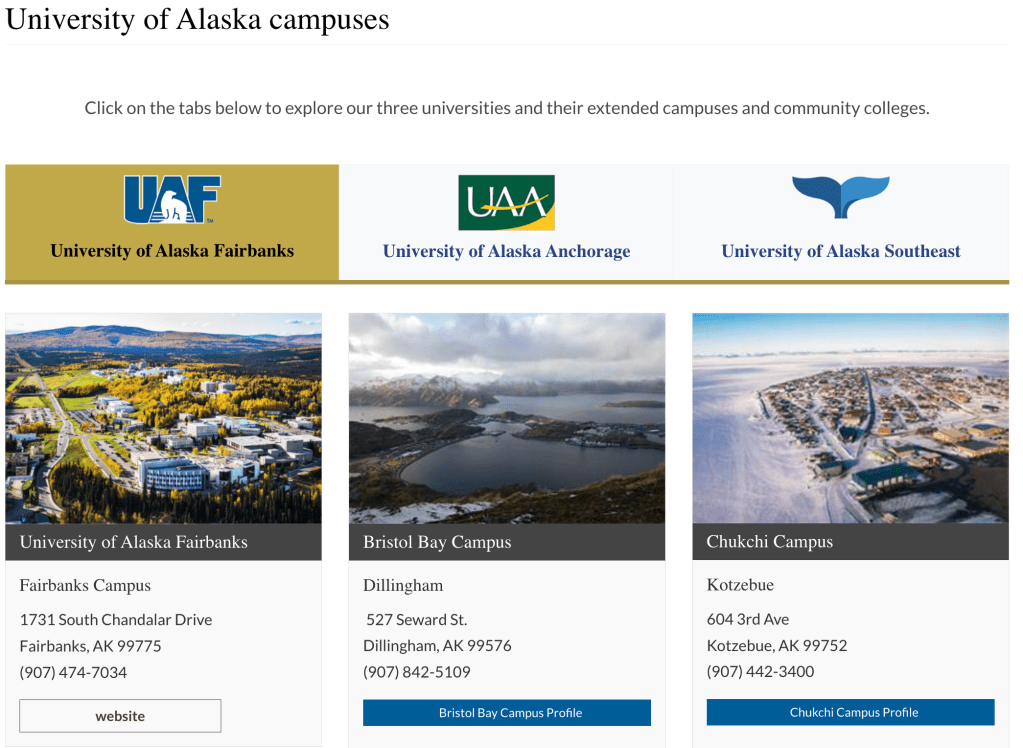
Highlighting UA’s Reach: Community Campus Profiles

Click the image to view profiles.

In addition to the University of Alaska’s main campuses (Anchorage, Fairbanks, Southeast), UA’s community campuses and technical colleges are the main connection to the University for students across the entire state. 

The newly published Community Campus Profiles demonstrate the unique and significant roles of each community campus and technical college to provide Alaskans access to postsecondary education, whether for short-term Career and Technical Education programs, two-year associate degrees, or pathways into a bachelor’s or graduate degree program. 

Each profile highlights the mission being served and more specifically:

  • Academic Year 2023 student data
  • Wage growth of program graduates
  • Student success, program highlights, and community impacts

These profiles highlight UA’s role in producing Alaska Workers for Alaska’s workforce, and the community campuses and technical colleges are central to fulfilling this responsibility to the state.

Source: University of Alaska, Office of Workforce Development

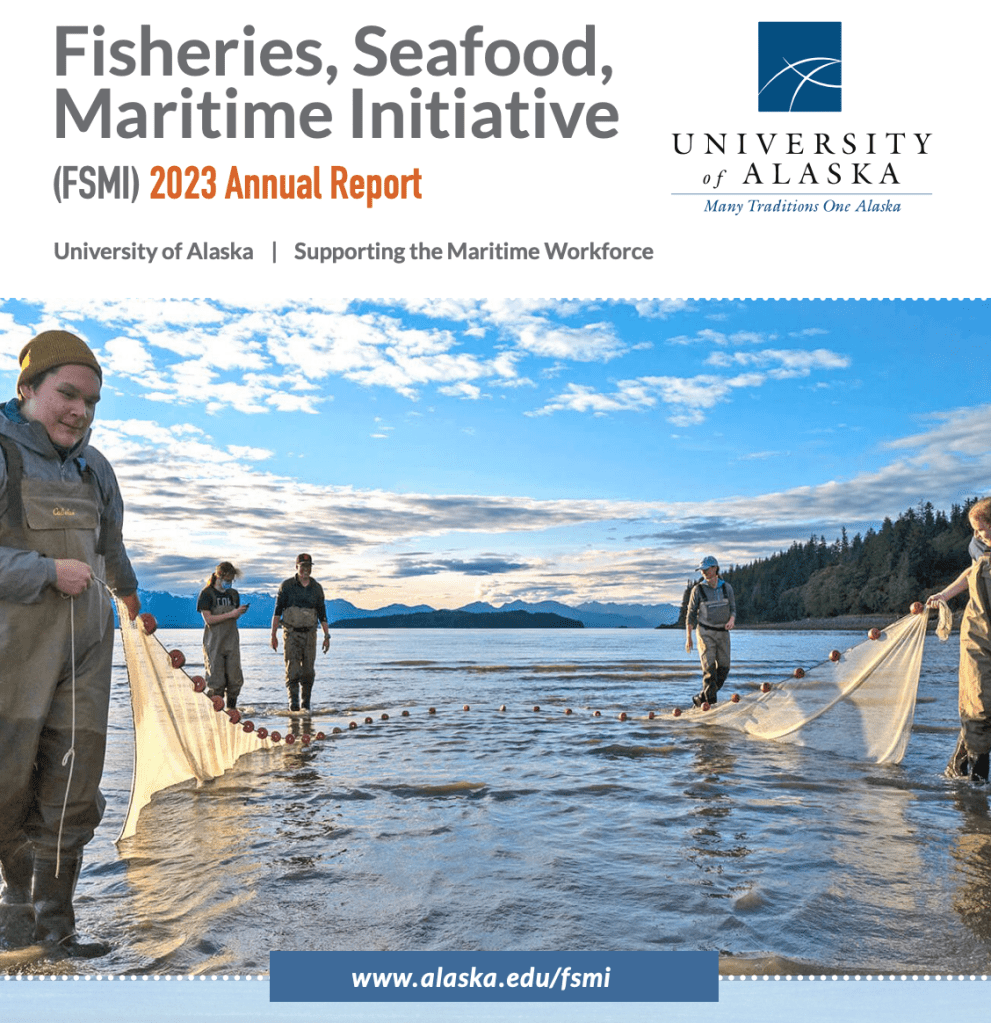
2023 UA Fisheries, Seafood, and Maritime Initiative Annual Report

Click the image to view the report.

The University of Alaska Fisheries, Seafood and Maritime Initiative (FSMI) and the industry-led group, Maritime Works, regularly collaborate to advance maritime workforce development in Alaska. The 2023 statuses and outcomes of their work are captured in this year’s report.

Click here to view all UA FSMI annual reports.

Source: University of Alaska Fisheries, Seafood and Maritime Initiative

UA Provides Critical Healthcare Training Programs to Alaska

Alaska’s healthcare landscape is undergoing significant transformation, with projections indicating a noteworthy 14.3% growth in healthcare jobs from 2020 to 2030—surpassing all other sectors. In this evolving landscape, the University of Alaska is a pivotal player, offering essential and unique healthcare programs that cater to the state’s growing needs.

With projections indicating a need for 4,500 new healthcare jobs over the next decade, UA’s commitment to meeting Alaska’s healthcare demands is more crucial than ever. Alaska boasts some of the highest wages for healthcare positions nationwide, with 15 categories ranking highest or second highest in the country. Additionally, Alaska’s healthcare sector remains a cornerstone of the state’s economy, contributing over $3 billion in direct wages and comprising 11% of the workforce and nearly 43,000 annual average healthcare jobs in 2022.

As healthcare emerges as the dominant economic sector in Alaska and with the state facing growing healthcare demands and workforce shortages, UA’s role in training skilled professionals will continue to be indispensable. 

Read the full article here.

    Source: UA News Center, Office of Public Affairs.