Alaska’s Fishing Fleet is Graying – A New Report Suggests Answers

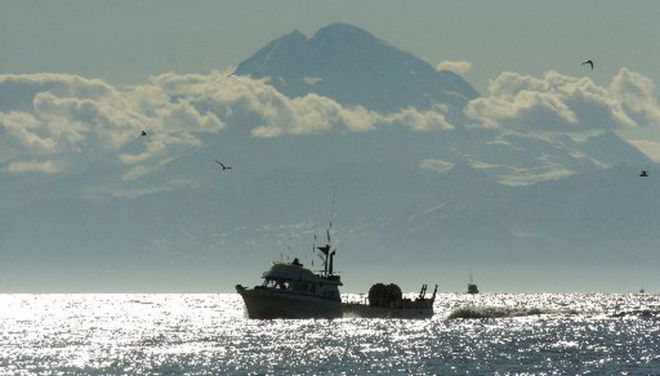
With the 10,197 foot volcano Mount Redoubt towering above in the distance, the 42-foot drift gillnetter “Sosueme” nears the mouth of the Kasilof River during a sunny day in June 2005. (BILL ROTH / ADN archive 2005)

This summer, working as a deckhand on her father’s fishing boat in Cook Inlet, Georgeanna Heaverley realized she was right where she wanted to be.

Heaverley, 29, a Soldotna resident and recent University of Alaska Fairbanks graduate in physics, was coming into her own as a deckhand on the fishing vessel Benjana, named for her brother, Benjamin, and herself.

Being in the middle of Cook Inlet is an incredible experience and something I do not take for granted. It’s like nothing else,” she said last week. Sometimes, the work seems almost primal.

“The other piece of it is you are feeding the world.”

Young fishermen and women like her are an increasingly rare commodity, despite the general health of Alaska’s commercial fisheries, according to a series of fishing reports.

For four years, a research team has been examining the graying of Alaska’s fleet and what to do about it.

The most recent report, out last week, is called “Turning the Tide.” It recommends five steps to reverse what it calls troubling trends of an aging fleet, and a loss of access for rural residents to fish as a career. That goal also underpinned a conference that brought Heaverley to Anchorage, the Young Fishermen’s Summit.

Read the full article here.

Source: Alaska’s fishing fleet is graying, and that’s not a good thing. A new report suggests answers. – Anchorage Daily News

CTE on the Frontier: Providing Learners Access to Diverse Career Pathways

Rural communities all too often face scarce funding, instructors and facilities, forcing institutions to choose between offering a variety of introductory courses across a breadth of subjects or providing more narrowly focused, sequenced programs within one or two priority Career Clusters. Providing learners access to diverse career pathways in rural areas is a persistent challenge for all states.

This brief from Advance CTE is the third installment in the CTE on the Frontier series, designed to help states identify promising strategies for expanding the variety of career pathways available in rural areas. The brief profiles how states such as Nebraska, Alaska, North Dakota and Idaho have leveraged strategic partnerships and new technologies to reach economies of scale and offer a wider breadth of career pathways to rural learners.

Other briefs in the CTE on the Frontier series include:

CTE on the Frontier: Providing Learners Access to Diverse Career Pathways was developed through the New Skills for Youth initiative, a partnership of the Council of Chief State School Officers, Advance CTE and the Education Strategy Group, generously funded by JPMorgan Chase & Co.

Source: Advance CTE


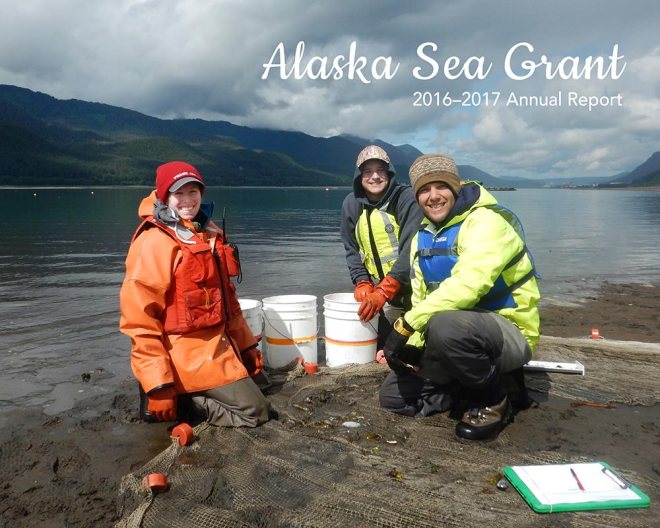
Alaska Sea Grant 2016-2017 Annual Report

Alaska Sea Grant (ASG) has worked in Alaska for nearly 50 years to sustain and grow Alaska’s coastal economies and communities through marine research, education, and training. They’ve accomplished a lot over the past year while also facing some very tough budget challenges from Washington, D.C.

Their new 2016–2017 annual report captures many of the highlights. If you want a print copy, drop by their Anchorage or Fairbanks office and pick one up. Or write to them and they’ll mail you one.

Source: News from Alaska Sea Grant

$2.4 Million Grant to Fund Study of Renewable Energy Impacts

A team of University of Alaska researchers has received a $2.4 million federal grant to study whether the use of renewable power could help small Alaska communities provide food, energy and safe water sustainably.

The National Science Foundation-funded project will study energy use and its impacts in the remote communities of Cordova, Tanana and Igiugig. Many off-road Alaska communities rely on expensive diesel generators for electricity, but interest is growing in alternate sources like wind, water and solar. Such alternative sources hold promise for supplying energy, and potentially food and water, but could affect the stability of a rural community’s microgrid.

Read the full article here.

Source: $2.4 million grant to fund study of renewable energy impacts – Alaska Business Magazine

University Sharpens Science of Firefighting in Alaska

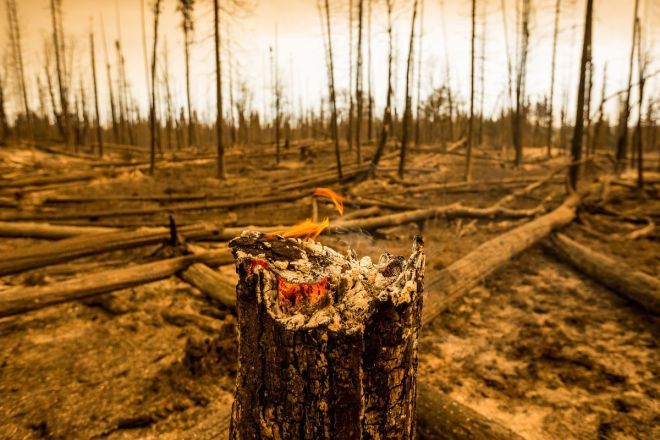
Compared to past years, 2017 has been a fairly slow wildland fire season in Alaska, with 332 fires that burned 626,361 acres by Aug. 2. But more active summers—like those in 2004, 2005 and 2015 (when 6.5, 4.6 and 5.1 million acres burned, respectively) — are nonetheless in our future.

Alaskans know fire is a natural, inevitable part of the boreal forest ecosystem, and Alaska is fortunate in our ability to tolerate fires in unoccupied areas, reducing fuel loads and renewing vegetation. But we can’t allow all fires to burn unchecked.

Alaska’s fire managers work hard to balance fire suppression actions to protect life and property with fire’s long-term benefits to our landscapes.

As agency budgets shrink and fire seasons lengthen, the challenges managers face in implementing this strategy have grown, particularly in populated areas. University of Alaska Fairbanks researchers have been asked to help agencies increase their operational efficiency by strengthening the science supporting their decision-making.

As Division of Forestry Director Chris Maisch has observed, the UAF’s work is “making a real difference for the agencies working on wildland fire issues in the state.” Together, we are evaluating fuel treatment programs, improving predictions of fire weather and fire danger, and expanding the use of satellite information sources to help prepare for future fire seasons.

In populated areas, preparation includes reducing hazardous fuels near at-risk Alaska communities by cutting fuel breaks and encouraging homeowners to follow “firewise” guidelines.

Read the full article here.

Source: University sharpens science of firefighting in Alaska – Alaska Dispatch News